A Data-Driven Match Preview and Strategic Analysis
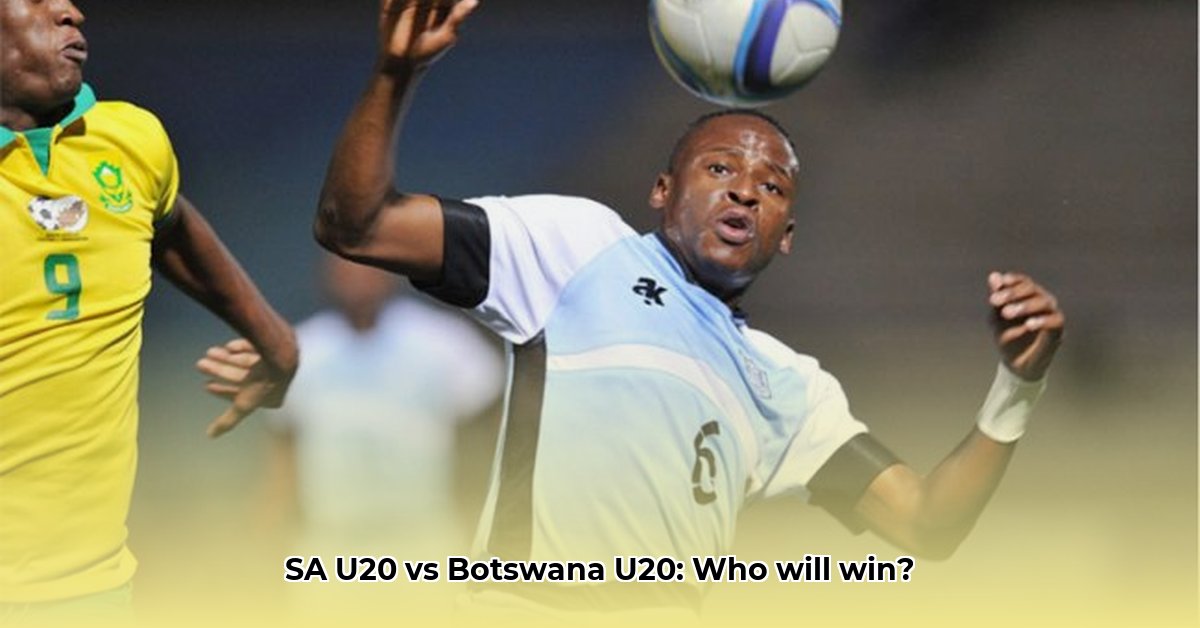
The upcoming COSAFA U20 Championship clash between South Africa (Amajita) and Botswana promises an intriguing encounter. While South Africa currently enjoys a superior position in Group B, predicting the outcome requires a nuanced approach, acknowledging both the available data and its inherent limitations. This analysis blends statistical observation with strategic insights to offer a comprehensive match preview.
The Current Standings: Evidence and its Limitations
South Africa's higher ranking in Group B suggests a greater probability of victory. This is a reasonable starting point based on points accumulated to date. However, relying solely on league standings is akin to judging a book by its cover. Crucial context is missing. We lack detailed match reports providing insights into playing styles, individual player performances, and the nature of previous wins and losses. Data scarcity severely limits the scope of a precise prediction. For example, did South Africa win comfortably or narrowly? Were Botswana's defeats close calls or substantial losses? Such detail would inform a more accurate assessment.
Predicting the Outcome: Probabilities, Not Certainties
Given the limited data, a definitive prediction is impossible. Nevertheless, South Africa's higher ranking does suggest a higher probability of success. This is purely a statistical observation: higher-ranked teams tend to outperform lower-ranked ones, ceteris paribus. However, football is unpredictable; upsets are entirely possible. To view this as anything other than a probability-based estimate would be misleading. A tactical masterclass from Botswana, or key injuries within the Amajita squad, could easily shift the balance.
Strategic Insights: Actionable Intelligence for Stakeholders
Understanding the game necessitates a strategic breakdown targeting key stakeholders:
- South Africa U20 Coaching Staff: Focus on identifying and exploiting Botswana's weaknesses through meticulous scouting. In-game adaptability based on real-time observations is paramount. Long-term, investment in advanced data analysis techniques and a robust youth development program will be key.
- Botswana U20 Coaching Staff: A strong defensive strategy is vital. Concentrate on identifying gaps in South Africa's defence and capitalising on any tactical vulnerabilities. Long-term development plans focused on player skill enhancement and tactical innovation are essential.
- COSAFA: Ensure fair officiating and effective communication surrounding the match to maximise fan engagement and media coverage. Investing in comprehensive data collection for future tournaments will allow for more accurate and detailed analyses, enhancing the overall tournament quality.
- Fans & Media: Engage with live match coverage from reliable sources for up-to-the-minute information and real-time analysis. Provide balanced reporting acknowledging both teams' strengths and weaknesses.
Risk Assessment: Uncertainties and Mitigation Strategies
The primary risk inherent in this prediction stems from the data's limitations. Unforeseen circumstances – injuries, refereeing decisions, unexpected shifts in team tactics – could significantly alter the outcome. To mitigate this, continuous data collection during the match is crucial for real-time adjustments.
Conclusion: A Balanced Perspective
Based on the limited available data, South Africa possesses a higher probability of victory. However, this analysis emphasizes the inherent uncertainties involved. The match itself will be the ultimate arbiter. Both coaching staffs must prepare for in-game adjustments and embrace the unpredictable nature of the beautiful game. Improved data collection mechanisms are needed to facilitate more refined predictions and analyses in future COSAFA U20 Championships.